
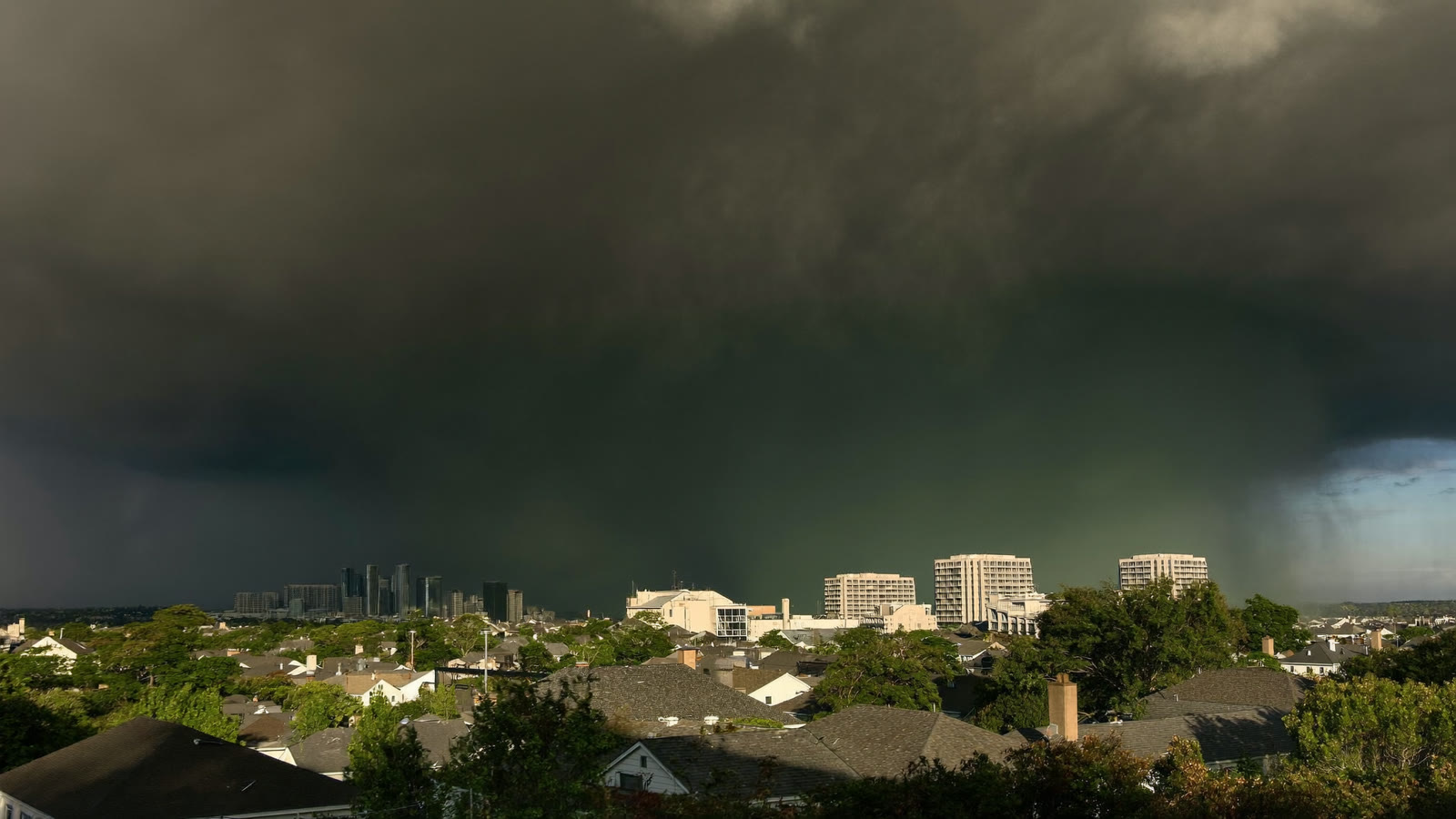
Storm Damage
After the storm, evidence beats opinion.
Missouri’s hail season runs April through June, and one bad afternoon can bruise every slope on your roof. We inspect it free, document every strike in photographs that are yours to keep, put the repair scope in writing, and stand on the roof with your adjuster to answer questions about what’s up there. The claim stays yours — Missouri law is specific about that, and we’ll explain exactly why.
The Claim
From Hailstorm to Handshake
Four steps from the storm to a finished roof. The claim stays yours the whole way — what we bring is the evidence and the roof.
Inspect & Document
We get on the roof, chalk-mark every hail strike and wind crease, and photograph all of it. The file is yours to keep either way.
You File, With Proof
The claim is yours to open — it’s your policy. You open it holding our photographs and a written scope, so the first thing your insurer sees is evidence, not a hunch.
We’re There for the Inspection
When the adjuster comes out we’re on the roof with them, showing what we found and answering their questions about the roof. We don’t negotiate for you — Missouri doesn’t allow it, and we’ll tell you why.
Build
Claim approved, we build to the approved scope — tear-off to magnet sweep, usually in one day, backed for 25 years.
We’ve written scopes in the format every major insurer works from, and we’ll walk any adjuster through ours on the roof. What we won’t do is negotiate your claim — Missouri reserves that to licensed public adjusters, and we’d rather explain that than let you find out later.
The Scope
What's Included
Hail & Wind Assessment
We check every slope for hail bruising, granule loss, creased tabs, and wind-lifted shingles — damage that’s invisible from the ground today and obvious two winters from now.
Photo Documentation
Every strike chalk-marked and photographed, every slope measured — and the whole file is yours to keep, whether you hire us, file a claim, or do neither.
Emergency Tarping
If water is coming in tonight, we tarp first and talk paperwork tomorrow. Stopping active damage always comes before the claim.
A Written Repair Scope
What the roof needs, itemized in plain language before anyone talks to an insurer — shingles, decking, flashing, ventilation, code items. It’s your document. You decide who sees it.
On the Roof When the Adjuster Is
We’re there for the inspection, showing the adjuster the damage we found and answering their questions about the roof. What we don’t do is speak for you — Missouri reserves that to licensed public adjusters, and we’ll say so out loud.
Scope Comparison, in Writing
We read the adjuster’s estimate against our own scope and hand you a written list of anything that differs — a slope, code-required items, damaged flashing — with the photos attached. Raising it with your insurer is your call to make, and you’ll have the evidence to make it.
Completion Documentation
On most replacement-cost policies the insurer holds back part of the payout until the work is finished. When the roof is done we give you the completion certificate and the photo record your insurer needs to release it.
Full Scope Build
Once the claim is approved, we build to the approved scope — decking, ice-and-water shield, shingles, ridge vents — same crew and same 25-year workmanship warranty as any roof we build.
The Damage
What Hail Actually Does to a Roof
A hailstone rarely punches a hole. What it does is subtler and slower: the impact bruises the shingle — fracturing the fiberglass mat inside and knocking loose the granules at the strike point. The roof doesn’t leak that day. But granules are the shingle’s sunscreen, and every bare spot now takes direct UV, drying out and cracking the exposed asphalt years ahead of schedule. A hail-hit roof is a roof aging on fast-forward, and the bill arrives two or three winters after the storm — usually after the claim window has closed.
This is why hail damage is nearly invisible from the ground, and why the neighborhood tells you more than your own driveway view does. Look for the side effects: granules accumulating in gutters and downspouts, dents in soft metal — gutters, downspouts, vents, the fins on your AC condenser — and mailbox-mounted roofing signs multiplying down the street. The bruises themselves take a trained eye on the roof, chalk in hand, checking every slope. That’s the inspection we do for free, and the photo file it produces is what a strong claim is built on.
The Paperwork
How the Claim Really Works
Most homeowner policies pay roofs at replacement cost value (RCV), and RCV claims pay in two checks. The first arrives after approval: the actual cash value — the scope minus depreciation for your roof’s age — less your deductible. The second, the recoverable depreciation, is released only after the work is completed and documented. Homeowners who don’t know about the second check sometimes never collect it, or take the first check and pocket it without building the roof, which forfeits the rest. If your policy is ACV-only, the depreciation is never recoverable — worth knowing before hail season, not after.
Then there are supplements. Adjusters work fast and estimates miss things — a slope, ice-and-water shield the local code requires, flashing that can’t be reused. A supplement is a request to add missed items to the scope, backed by documentation, and it’s normal on roofing claims — not a fight, just paperwork done properly. The request comes from you, because it’s your policy and your claim; what we bring is the photographs, the measurements, and a written scope specific enough that the gap is obvious on paper. That’s why we document everything before you ever file.
One more thing Missouri homeowners should know: state law (Section 407.725, RSMo) makes it illegal for a contractor to pay, waive, or rebate your insurance deductible — so anyone offering to “eat” it is proposing insurance fraud with your name on the claim. The same statute gives you the right to cancel a contractor’s contract within five business days of your insurer denying the claim. A roofer who explains those rules to you unprompted is the kind you want on your roof.
The Line We Don’t Cross
What a Roofer May Do With Your Claim — and What He May Not
Half the storm-chasing pitch in this state is illegal, and almost nobody says so. Section 407.725, RSMo is blunt about it: a residential roofing contractor shall not represent or negotiate — or offer or advertise to represent or negotiate — on a homeowner’s behalf on any insurance claim involving a roof. That’s public adjusting, and Missouri reserves it to people licensed under Chapter 325. Advertising it is its own violation, and a violation counts automatically as an unfair practice under the Missouri Merchandising Practices Act.
So here is our side of the line, plainly. We can inspect your roof and document what we find. We can give you photographs and measurements that are yours to keep. We can write a detailed repair scope and put a price on it. We can be on the roof while your adjuster inspects, point out the damage we found, and answer any question they have about the roof itself. We can read the adjuster’s estimate against our scope and tell you in writing where the two differ.
What we cannot do — for you or for anyone — is speak for you to your insurer, argue coverage, negotiate the payout, or sign anything that assigns your claim to us. Those are yours, or a licensed public adjuster’s, or your attorney’s. Honestly, that division is better for you anyway: our incentive runs toward a bigger scope, and you should want the person arguing your claim to be someone who isn’t also selling you the roof.
Our Promise
25 Years.
In Writing.
An insurance roof from Korvix isn’t a patch job — it’s a full replacement carrying the same 25-year workmanship warranty as any roof we build. The storm paid for it; we stand behind it.
Straight Answers
Common Questions
Free Inspection
After the storm, before the next one.
A free storm inspection tells you honestly whether the damage is worth a claim — and leaves you holding the photographs either way.